A soft spot near the seawall, a widening crack in the patio, or pavers that no longer sit level can be more than a surface problem. On Florida waterfront property, these changes often point to soil loss beneath the ground. The right waterfront foundation repair solutions address that hidden movement before it reaches the home, dock, pool deck, or shoreline structure you depend on.
Waterfront repairs are different from ordinary foundation work. Tides, waves, boat wakes, seasonal rain, fluctuating groundwater, and aging seawalls all affect the soil supporting your property. A repair that ignores the seawall or the path water is taking underground may improve one symptom while allowing the cause to continue.
Why Waterfront Foundations Settle
Your home and hardscape rely on compact, stable soil for support. Along a canal, bay, river, or gulf-front shoreline, that soil can wash out through cracks, joints, tie-rod locations, drainage paths, or voids behind a seawall. This process is often gradual, which is why many property owners first notice it in places that seem unrelated to the shoreline.
You may see cracking in a concrete slab, separations at a pool deck, tilting walkways, gaps near a retaining wall, or doors that suddenly stick. The lawn may dip along the seawall, pavers may settle, and water may pool where it never did before. These are warning signs, not a diagnosis. The underlying cause could be erosion, poor drainage, a failed seawall joint, unstable fill, or a combination of conditions.
The key is to identify where soil is moving and why. Filling a visible depression without stopping the water pathway is rarely a lasting repair. Likewise, treating a foundation crack without evaluating the shoreline can leave a homeowner paying twice for related problems.
Waterfront Foundation Repair Solutions Start Below Grade
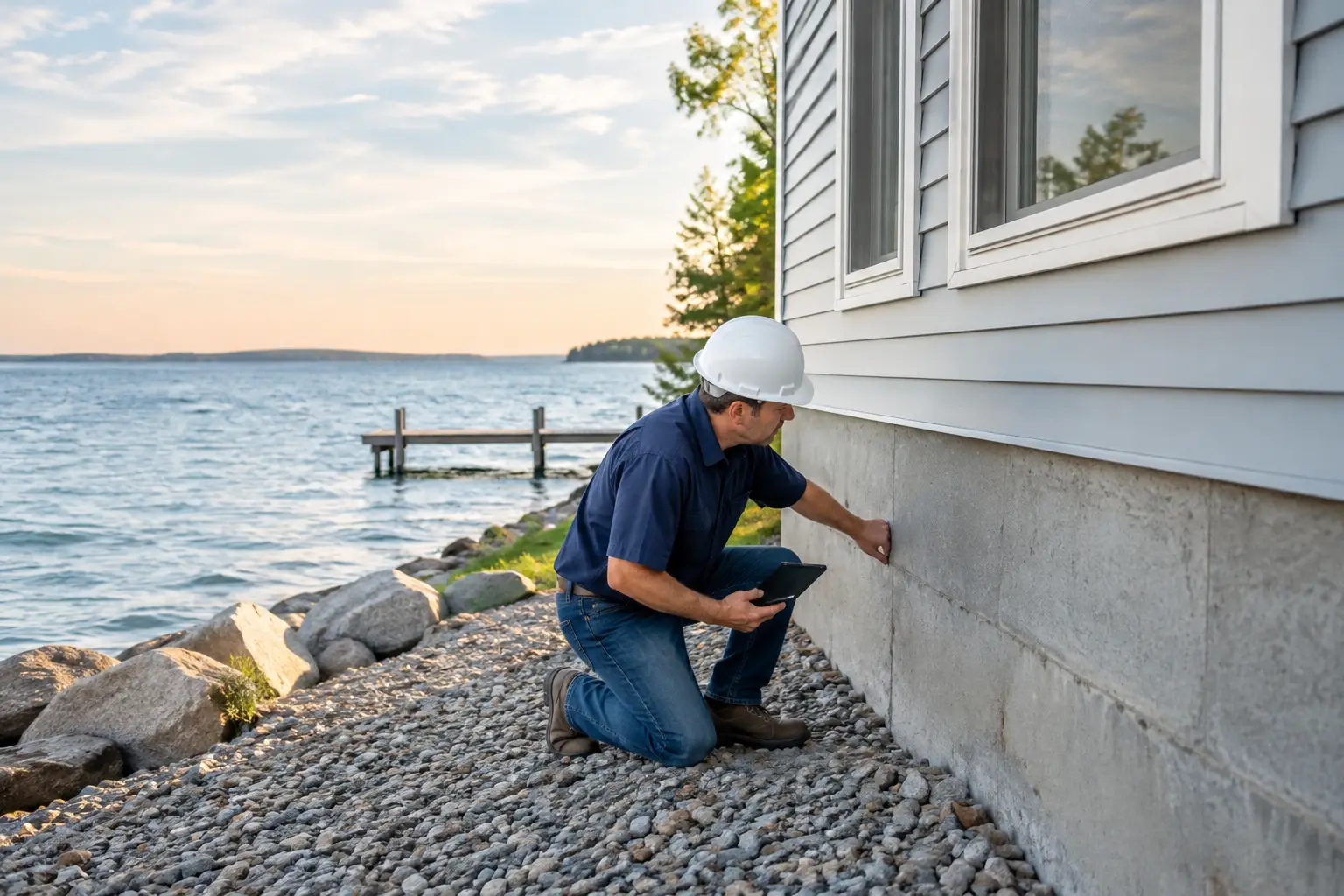
A proper repair plan begins with an inspection of the full waterfront system. That includes the seawall face, cap, joints, soil behind the wall, surrounding concrete, drainage patterns, and signs of settlement around the structure. For properties with docks, piling condition and shoreline activity may also provide useful context.
At Adams Seawall and Foundation Repair, inspections are repair-focused and no-conflict. The goal is not to push a full replacement when targeted restoration can protect the property. Homeowners deserve a clear explanation of what is failing, what can be repaired, and what work is necessary now versus what can be monitored.
Soil stabilization for voids and washout
When erosion has created empty spaces beneath concrete, pavers, or landscaped areas, stabilization can restore support without tearing up the entire property. Depending on site conditions, specialized material is placed into affected areas to fill voids, densify loose soil, and reduce the risk of continued settlement.
This approach is particularly valuable where access is limited or where excavation would disrupt a finished pool deck, mature landscaping, driveway, or waterfront living area. It is not a one-size-fits-all fix. If water is still entering through a failing seawall, crack, or drainage opening, that entry point needs repair as part of the plan.
Seawall repair to stop the source of soil loss
Many waterfront foundation issues begin at the seawall. Small cracks and failing joints can allow fine soil to migrate toward the water behind the wall. Over time, that loss can create larger voids and threaten nearby concrete, retaining walls, and foundations.
Repair-first seawall restoration can seal pathways, reinforce compromised sections, and stabilize the soil behind the structure without the disruption of a full replacement. For an otherwise serviceable seawall, this can save thousands of dollars and preserve more of the property during construction. The trade-off is straightforward: repairs work best when the wall still has enough structural integrity to be restored. A severely deteriorated or extensively displaced wall may require a broader solution.
Foundation and slab support
When settlement affects a home, addition, garage, or structural slab, the repair must be based on the condition of the structure and the soil beneath it. Foundation cracking does not always mean a foundation is failing, but it should never be dismissed on waterfront property.
A careful evaluation distinguishes cosmetic cracking from movement that requires stabilization. The right plan may involve soil support, drainage correction, seawall restoration, or targeted structural repair. Addressing only the visible crack can conceal the problem without protecting the value of the home.
Drainage and flood protection improvements
Florida’s heavy rain can turn a minor soil-loss issue into a serious one. Water that collects near the home or drains toward a seawall can carry fine material through existing defects. Poorly placed downspouts, low areas in the yard, and runoff from hard surfaces all deserve attention during a waterfront assessment.
Drainage improvements are often a supporting part of the repair, not a separate afterthought. The objective is to direct water away from vulnerable areas and reduce pressure on the seawall and supporting soils. For low-lying homes, flood protection measures may also help limit damage during storm events and high-water conditions.
What a Low-Disruption Repair Process Looks Like
Waterfront homeowners should not have to choose between protecting their foundation and losing access to their property for weeks of unnecessary excavation. Many repair-first methods are designed to work with the existing site, preserving landscaping, patios, docks, and daily use whenever conditions allow.
The process starts with a site-specific inspection. A contractor should document visible symptoms, examine likely water-entry points, and explain the relationship between the seawall, soil, and affected structure. From there, the repair plan should state what is being corrected, how the work will be performed, and what results the homeowner can reasonably expect.
Transparent pricing matters because waterfront projects can vary widely. A small, localized void is not the same as extensive erosion behind a long seawall, and neither should be priced or treated as though it is. Ask whether the proposed scope stops the source of soil loss, restores support, and includes a clear warranty.
For qualifying repairs, Adams Seawall and Foundation Repair backs its work with a 30-year transferable warranty. That protection can provide confidence for current owners and strengthen the appeal of a waterfront property when it is time to sell.
When to Schedule an Inspection
Do not wait for a large sinkhole or a major structural crack to investigate settlement. Early action is usually less invasive and less expensive because the affected area is smaller and the surrounding structures have not yet been compromised.
Schedule a professional inspection if you notice new cracks near the waterfront side of the home, sinking pavers or patios, depressions in the yard, loose soil behind the seawall, standing water after rain, gaps between concrete sections, or changes in how gates and doors operate. If a seawall has visible cracking, leaning, bowing, or water movement through joints, it should be evaluated promptly.
Recent storms are another reason to look closely. High water, wave action, and saturated soil can expose weaknesses that were developing quietly for years. Second-home owners and investors should consider periodic inspections even when they are not at the property regularly, since small shoreline changes can be easy to miss.
A waterfront home is supported by more than its visible foundation. The seawall, soil, drainage, and shoreline all work together to protect the structures above them. A timely inspection gives you a practical path to repair the cause, preserve the property you enjoy, and avoid letting hidden soil loss become the next major project.