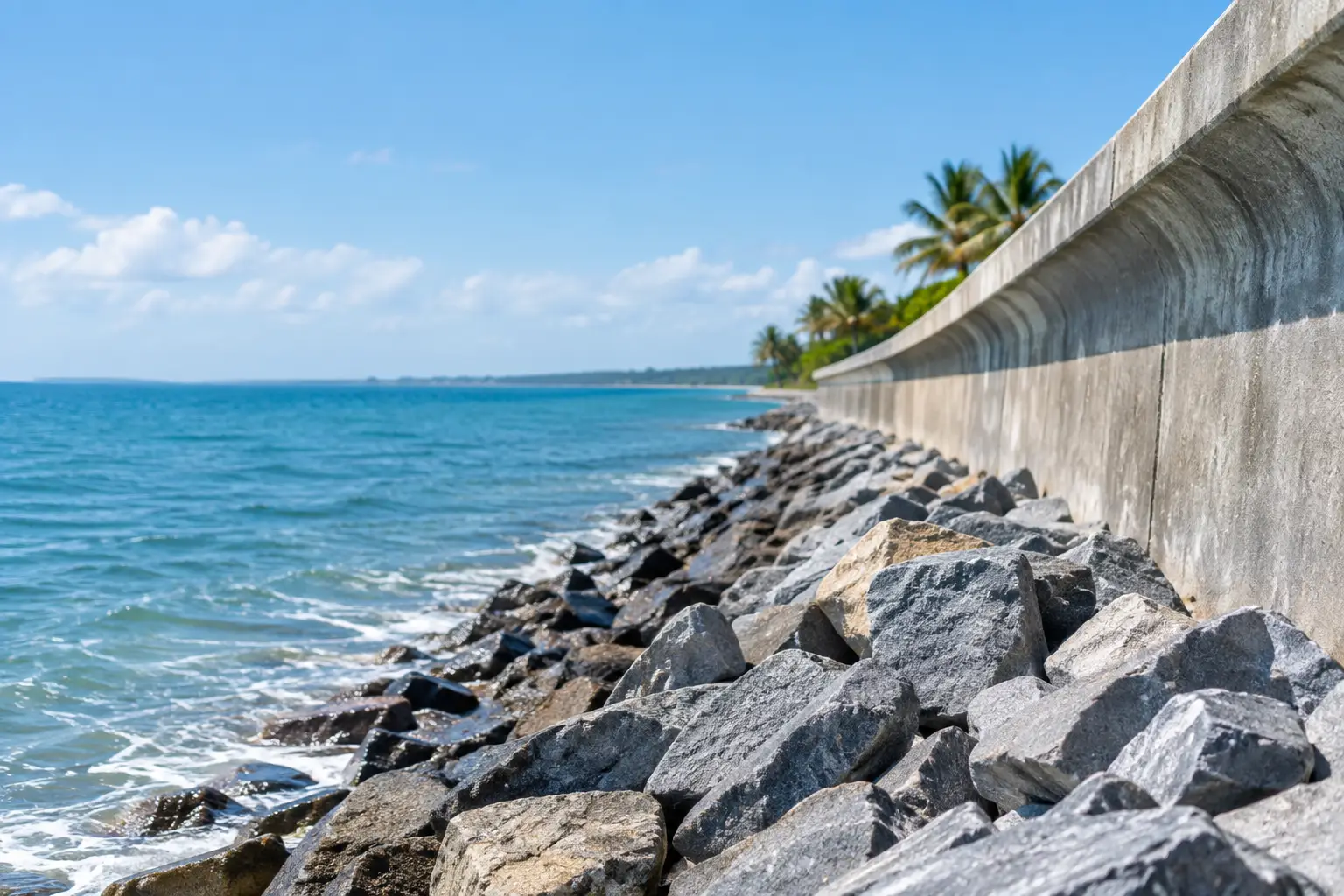
A disappearing strip of soil along your seawall is not just a landscaping problem. When the ground behind a waterfront wall begins to settle, it can create voids under patios, pool decks, walkways, fence posts, and even parts of the home’s foundation. Knowing how to stop erosion behind seawall structures starts with identifying where water is entering and repairing the wall before the loss of soil spreads.
For Florida waterfront property owners, erosion often develops out of sight. A seawall may still look straight from the water while fine soil is washing through joints, cracks, utility openings, or failed tie-back areas on the landward side. The right repair is rarely more fill dirt. It is a way to stop the water pathway, stabilize the soil that remains, and protect the property without turning the yard into an excavation site.
Why Soil Washout Happens Behind a Seawall
A seawall is designed to retain soil while standing up to water pressure, wave action, tides, and changing groundwater conditions. Over time, movement and exposure can open small gaps in the wall or at its connections. Water then carries sand and fine soil through those openings, especially during heavy rain, king tides, boat wakes, and storms.
The source is not always on the water side. Rainwater running toward the wall, leaking irrigation lines, poor drainage, or broken downspouts can saturate the soil behind it. As water finds an exit through a crack or joint, it takes soil with it. That repeated movement creates empty pockets below the surface.
On Florida canals and coastal properties, common causes include deteriorated panel joints, cracks in concrete seawall panels, failed cap sections, corroded hardware, gaps around dock pilings, and aging drainage systems. A property can also have more than one cause at the same time. That is why a visual crack alone does not tell the full story.
The Warning Signs You Should Not Ignore
Soil loss behind a seawall often announces itself in subtle ways before a major collapse occurs. A new depression in the lawn, pavers that no longer sit level, a widening gap between the seawall cap and adjacent concrete, or mulch that disappears after rain all deserve attention.
Watch for these four signs in particular:
- Sinkholes, soft spots, or sunken areas near the seawall
- Cracking or settlement in patios, pool decks, walkways, and driveways
- Water bubbling up through the ground or draining unusually fast near the wall
- Visible cracks, open joints, leaning sections, or separation at the seawall cap
Do not assume a small void will stay small. As soil support disappears, the loads on nearby concrete and structures change. A patio slab can crack, a fence can lean, and the seawall itself can lose the backfill it needs for support. After a major storm, inspect the shoreline side of your property before covering any changes with new sod, rock, or fresh soil.
How to Stop Erosion Behind a Seawall: Start With the Water Path
The first step is to identify how water is moving through and around the seawall. A qualified marine repair inspection should examine the visible wall, joints, cap, drainage conditions, dock connections, and signs of settlement on the landward side. The goal is not to sell a replacement before understanding the failure. It is to locate the entry and exit points that are allowing soil to migrate.
If water is passing through cracks or panel joints, sealing those openings is often part of the solution. If a void has already formed behind the wall, the repair also needs to address the missing support. Simply sealing the front-facing crack without stabilizing the soil behind it can leave an empty pocket under the surface.
This is where repair-first methods can make a meaningful difference. Many seawalls do not need full replacement when the wall panels remain structurally serviceable. Targeted repair may stop active soil loss and restore the support behind the wall with far less disruption than removing landscaping, decks, or hardscape for extensive excavation.
Stabilize the Voids, Not Just the Surface
Filling a low spot with topsoil may make the yard look better for a while, but it does not stop erosion. If the water path remains open, the new soil can wash out just as quickly. The repair needs to reach the void and provide stable support beneath the surface.
Depending on the wall’s condition and the size of the affected area, contractors may use pressure grouting or specialized soil stabilization materials to fill voids behind the seawall. The material is installed through small access points and placed where support has been lost. This approach can help restore bearing support for soil and adjacent slabs while avoiding broad excavation.
The right material and installation method depend on site conditions. A small void under a walkway is different from widespread washout beneath a pool deck or near a foundation. Soil type, water conditions, wall condition, drainage, and the weight of nearby structures all affect the repair plan. Eco-safe stabilization options are particularly valuable along Florida waterways because the work must protect both the property and the surrounding marine environment.
Repair the Seawall Before Settlement Becomes Structural
A seawall with open joints, cracking panels, or a damaged cap needs more than cosmetic patching. Surface mortar may hide an opening temporarily, but it can fail if the underlying concrete is moving or water pressure is still concentrated at that point.
Professional repairs can include joint sealing, crack repair, structural reinforcement, cap restoration, and targeted stabilization behind the wall. When a section is damaged beyond repair, replacement of that specific section may be appropriate. The practical answer is not always the largest project. It is the repair that addresses the wall’s actual condition and gives the retained soil a stable barrier again.
Be cautious when someone recommends full seawall replacement without explaining why repair is not viable. Replacement is sometimes necessary, particularly with severely deteriorated, leaning, displaced, or structurally failed walls. But a repair-first assessment can prevent homeowners from paying for major construction when a durable, targeted solution is still available.
Improve Drainage on the Landward Side
Stopping erosion also means managing the water that starts on your property. Rainfall is intense in Florida, and poor drainage can build pressure behind a seawall even when the wall itself is in fair condition.
Make sure downspouts do not empty directly beside the wall. Check irrigation heads for overspray and broken lines. Keep grading from directing large volumes of runoff toward one area of the seawall, and have drainage outlets inspected if water regularly pools near the cap or landscape edge.
Drainage changes should be coordinated with the seawall repair plan. An outlet that is installed incorrectly can create a new washout path. A marine repair professional can help determine whether drainage is contributing to the problem and how it should be managed without compromising the wall.
Protect Nearby Features During Repairs
Many waterfront owners delay repair because they expect torn-up landscaping, damaged pavers, or weeks without use of the yard. Those concerns are reasonable. The repair method matters as much as the repair itself.
Minimally invasive stabilization and sealing methods can often be completed from small access points, preserving patios, pool areas, landscaping, and normal access to the property. That is especially helpful for second-home owners, retirees, and homeowners preparing a waterfront property for sale. Less disruption also means fewer restoration costs after the structural work is complete.
Before work begins, ask how the contractor will access the area, protect hardscape, manage materials near the water, and verify that voids have been addressed. You should receive a clear scope of work, transparent pricing, and an explanation of what the repair is designed to prevent.
When to Schedule a Seawall Inspection
Schedule an inspection promptly if you see active settlement, a hole near the wall, fresh cracking in a patio or seawall cap, or soil washing away after storms. It is also smart to have the wall checked before buying or selling a waterfront property, beginning a pool or dock project, or making expensive landscape improvements near the shoreline.
A no-conflict inspection should give you actionable information, not pressure to commit to replacement. Adams Seawall and Foundation Repair evaluates the seawall and surrounding soil conditions to recommend practical repair options, with minimally disruptive methods and a transferable 30-year warranty on qualifying work.
The best time to stop erosion is when the first low spot appears, not when the patio starts sinking. A clear inspection and a repair plan matched to the wall’s condition can protect the waterfront space you already enjoy and keep a manageable repair from becoming a much larger property problem.