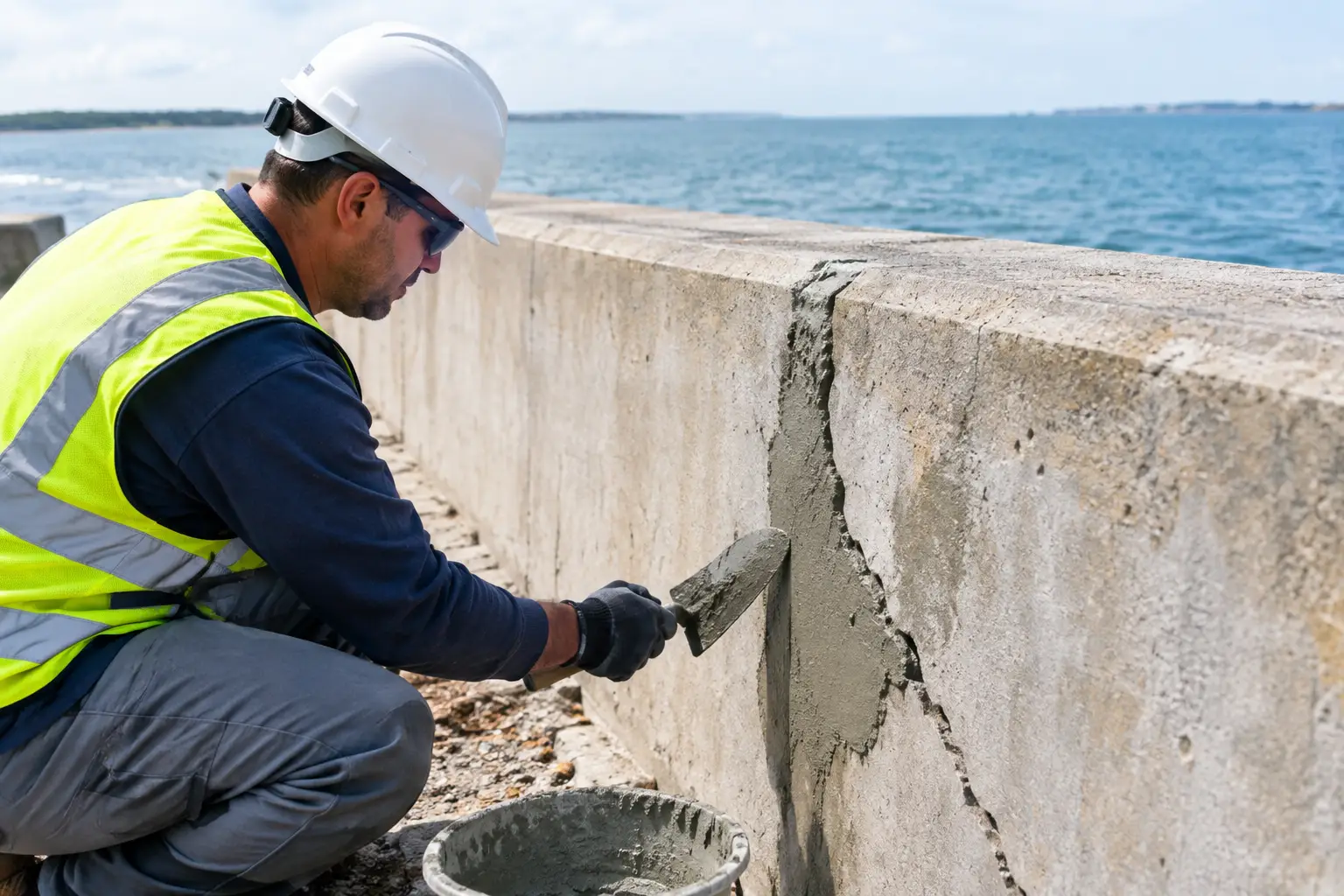
A crack in a seawall is rarely just a concrete problem. On Florida waterfront property, seawall crack repair methods must address what is happening behind the wall: water movement, escaping soil, and the pressure that can turn a narrow crack into sinking ground, damaged patios, and a compromised shoreline.
The right repair depends on the crack’s location, width, movement, and the condition of the soil behind the seawall. A surface patch may improve appearance, but it will not stop erosion if water is still carrying sand through the wall. The goal is to restore the wall’s function while protecting the land it holds back.
Why Seawall Cracks Need More Than a Surface Patch
Seawalls are exposed to saltwater, changing tides, boat wake, storm surge, rain, and shifting soils. Over time, those forces can open cracks in concrete panels, separate joints, and create voids behind the structure. Once water finds a path through the wall, it can pull soil toward the water side with every tide cycle.
Homeowners often first notice a thin vertical crack, a seam opening between panels, or a small depression in the yard near the seawall. Other warning signs include loose pavers, leaning fence posts, washed-out landscaping, gaps at the seawall cap, or soil appearing on the water side of the wall.
The visible crack matters, but the hidden void is often the more urgent concern. Repairing the face of the wall without stabilizing the soil behind it can leave the underlying problem active.
Start With an Inspection of the Whole System
A proper repair plan begins by determining whether the crack is cosmetic, active, or part of a larger structural issue. That means looking beyond the damaged concrete.
A seawall inspection should consider the panel condition, joints, cap, drainage, tie rods where applicable, surrounding grade, and signs of soil loss. The water side also matters. Scour at the base of the wall, damaged seawall footing areas, or persistent wave action may affect which repair will last.
For a Florida canal-front or coastal home, the same crack can require a different approach depending on whether the wall is holding stable ground or losing material behind it. This is why a repair-first contractor should not prescribe full replacement based on a quick look at the surface.
Seawall Crack Repair Methods That Address the Cause
Polyurethane grout injection for leaking cracks and voids
Polyurethane grout injection is one of the most effective minimally invasive seawall crack repair methods when water intrusion and soil loss are present. Technicians inject specialized expanding grout through small access points along the seawall or adjacent ground. The material reacts with water and expands to fill voids, seal pathways, and stabilize loose soil.
This approach can stop water from washing soil through cracks, joints, and gaps while supporting the ground behind the wall. It is especially useful when a homeowner has noticed sinking soil, settling pavers, or voids forming near the cap.
The benefit is access. In many cases, injection repairs can be completed without tearing out a patio, removing a seawall cap, or excavating the entire yard. That reduces disruption to landscaping, docks, pool areas, and everyday use of the property.
Still, grout injection is not a cure for every wall. If panels are significantly displaced, reinforcement is badly deteriorated, or the wall has lost its ability to resist lateral pressure, stabilization alone may not be enough.
Crack injection for localized concrete damage
For isolated cracks in otherwise sound concrete, a targeted crack injection may be appropriate. Depending on the crack and moisture conditions, contractors may use flexible polyurethane materials to block active water intrusion or epoxy-based products for certain dry, stable structural cracks.
The distinction matters. Epoxy can bond cracked concrete, but it is not designed to solve active water flow or washout behind a seawall. A leaking crack needs a material and installation method that can work in wet marine conditions.
After the crack is sealed, the repair area may be finished to provide a cleaner appearance. That finishing work is useful, but it should be the last step, not the entire solution.
Joint sealing and panel seam repair
Many seawalls are built from individual panels. The joints between those panels can gradually separate as soil settles, tides move water through the structure, or the wall experiences normal age-related movement. Open seams can become direct channels for soil loss.
Joint repair typically involves cleaning the failed area, sealing the seam with a marine-appropriate flexible material, and addressing any voids behind it. When done with soil stabilization, seam repair helps restore the barrier that keeps the property’s fill material where it belongs.
A rigid patch placed across a moving joint often fails again. Seams need flexibility because adjacent panels can move independently over time.
Soil stabilization behind the seawall
When erosion has created hollow areas behind the wall, the repair should focus on rebuilding support in the affected soil. Pressure grouting and expanding stabilization materials can fill those hidden voids and reduce future settlement.
This work is particularly valuable when the seawall still has sound structural components but the ground behind it has started to sink. It can help preserve patios, walkways, landscaping, and foundations near the waterfront before damage spreads inland.
Eco-safe stabilization materials are a practical choice for waterfront repairs because they are designed for use around marine environments. The exact material and injection pattern should be based on the extent of voiding, the soil type, and access conditions at the property.
Cap, tieback, and structural component repairs
A cracked cap or loose cap section can allow water to enter from above, especially during heavy Florida rain. Repairing cap cracks, resealing transitions, and correcting drainage can reduce the amount of water reaching the backfill.
Some seawalls also rely on tiebacks, deadmen, or other structural components that resist soil pressure. If these elements have failed, corroded, or pulled loose, the wall may require a more involved structural repair. This is a different problem than a leaking crack, though the symptoms can overlap.
A qualified inspection separates a repairable leakage issue from a wall that is actively moving or losing structural support.
When Full Replacement May Be the Safer Choice
Repair-first solutions can save thousands when the seawall remains structurally viable. However, responsible advice means recognizing when a repair would only delay a larger failure.
Replacement may be necessary when large sections of the wall are leaning or rotating, concrete panels are badly fractured, reinforcing steel has widespread corrosion, or the seawall has suffered major storm damage. A wall with extensive structural displacement may no longer be capable of holding back the soil, even if individual cracks can be sealed.
The best decision is based on condition, not sales pressure. A no-conflict inspection should give you a clear explanation of what can be repaired, what should be monitored, and when replacement is the more dependable investment.
What Homeowners Can Do Before Repair Work Begins
Avoid adding heavy loads near a cracked seawall. Parking equipment, stacking materials, or installing new hardscape close to an area with suspected soil loss can increase pressure on already weakened ground. Keep an eye on new depressions, pooling water, widening cracks, and changes after storms or unusually high tides.
It also helps to manage runoff. Downspouts that discharge directly near the seawall and poorly graded landscaping can add unnecessary water to the backfill. Drainage corrections do not replace structural repair, but they can help protect the repair once it is complete.
Do not assume a small crack is harmless because the property still looks level. Soil loss can progress quietly behind a seawall for months or years before a paver deck, fence, or nearby structure begins to settle.
Choose a Repair Plan Built for Your Waterfront Property
The most durable seawall repair combines accurate diagnosis with the least disruptive method that truly solves the problem. For many Florida property owners, that means sealing active pathways, filling voids, stabilizing the soil, and preserving a seawall that still has years of service left.
Adams Seawall and Foundation Repair takes that repair-first approach with inspection-led plans, minimal excavation where appropriate, and a 30-year transferable warranty on qualifying work. The focus is not on selling the biggest project. It is on protecting the shoreline, the land behind it, and the value of the home.
If a crack is growing, soil is disappearing, or the ground near the water feels less stable than it used to, act before the next storm season makes the decision more expensive. A clear inspection can turn a worrying waterfront problem into a practical repair plan.