
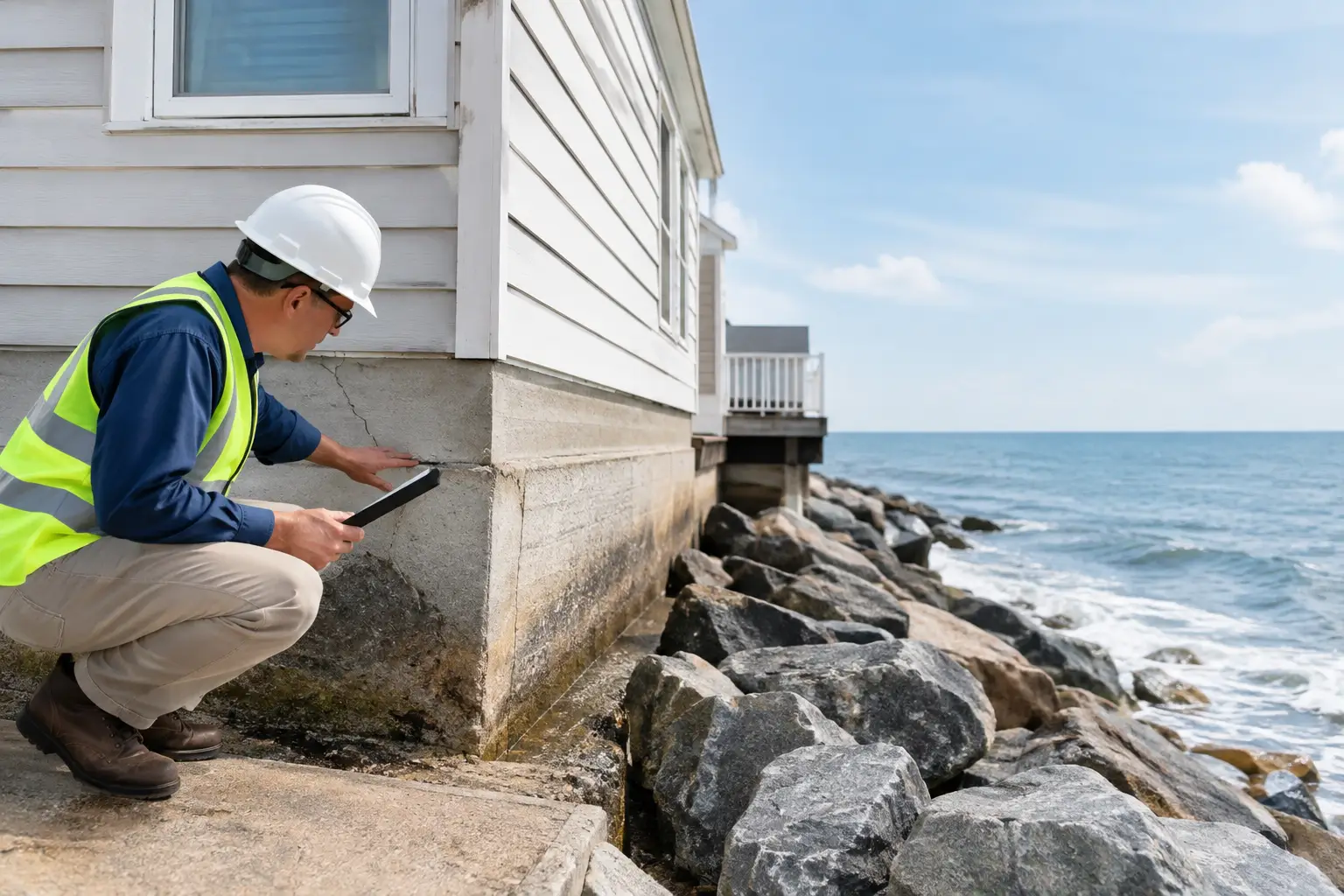
A crack across a patio slab can be easy to dismiss. But when that slab sits between your home and the water, it may be the first visible sign of a larger problem below grade. Foundation settlement near seawall conditions often begin with soil loss behind the wall, then work inland toward walkways, pool decks, driveways, retaining walls, and, in serious cases, the home itself.
For Florida waterfront owners, the right question is not simply, “Can this crack be filled?” It is, “Why did the ground move, and has the cause been stopped?” Addressing the surface without stabilizing the soil below can leave the property exposed to continued settlement and more expensive structural work later.
Why a Seawall Can Affect Nearby Foundations
A seawall is more than a boundary at the water’s edge. It holds back the soil that supports the entire waterfront portion of a property. When joints, cracks, tieback areas, or drainage paths allow soil to escape, voids can form behind the wall. Rainwater, irrigation, tidal movement, and wave action can carry loose material into those openings over time.
The result is often gradual rather than dramatic. Soil may settle below a paver walkway, a pool deck may begin to slope, or a gap may appear where a patio meets the house. As the supporting ground compresses or washes away, structures built on that ground can move with it.
That does not mean every foundation crack near the water is caused by a seawall. Florida homes can also settle because of poor compaction, aging drainage systems, plumbing leaks, tree roots, or natural soil movement. The location and pattern of the damage matter. A qualified inspection should look at the seawall, the soil behind it, drainage conditions, and the affected structure as one connected system.
Warning Signs of Foundation Settlement Near a Seawall
Waterfront settlement rarely announces itself with one obvious failure. More often, property owners notice several small changes that become harder to ignore. A new crack in concrete may be cosmetic. A crack that widens, runs toward the shoreline, or appears alongside sinking soil deserves closer attention.
Look for changes such as uneven pavers, depressions in the yard, gaps under slabs, cracked pool coping, doors or windows that no longer operate smoothly, and separation where an exterior wall meets a porch or patio. A leaning fence, tilted retaining wall, or exposed void near the seawall can also point to lost soil behind the wall.
Pay attention after heavy rain, a storm surge, or an unusually high-water event. These conditions can reveal drainage paths and soil loss that were not visible during dry weather. Standing water near the home or water disappearing quickly into a soft spot can be a useful clue, especially if the area is close to the seawall.
A homeowner should also take visible seawall deterioration seriously. Open joints, cracking panels, rust staining, leaning sections, failing cap areas, or soil washing out from behind the wall are not isolated cosmetic issues. They can be part of the same chain of events affecting nearby hardscape and foundations.
The Real Risk Is the Void You Cannot See
Settlement is not always caused by the wall moving outward. A seawall can appear relatively straight while soil is quietly leaving through openings below the surface. That hidden loss creates pockets where the ground is no longer providing consistent support.
This is why simply adding topsoil to a low spot is rarely a lasting solution. Fresh soil can improve the appearance of the yard, but it does not seal the path that allowed material to escape. If the loss continues, the new fill may settle too.
The same principle applies to patching a crack without investigating its cause. Concrete repair has a place, but cosmetic work should follow stabilization, not replace it. Otherwise, an owner may spend money twice while the underlying void grows.
Start With an Inspection That Connects the Dots
A practical inspection starts at the shoreline and works inland. The goal is to identify whether the seawall is allowing soil migration, whether voids have developed, and whether settlement has reached structures that need separate evaluation or support.
An experienced marine repair contractor will examine visible seawall conditions, soil grades, drainage, cracking patterns, slab movement, and areas where water may be entering or leaving the property. They should explain what they see in plain language and distinguish between an active problem and an older condition that can be monitored.
For significant structural movement in the home, an independent structural engineer may also be appropriate. This is especially true when cracks are widening, floors are noticeably sloped, walls are separating, or doors and windows are binding throughout the house. A seawall contractor and structural engineer can serve different roles: one addresses waterfront soil retention and stabilization, while the other evaluates the building’s structural condition.
At Adams Seawall and Foundation Repair, the repair-first approach begins with a free, no-conflict inspection and an actionable plan. That matters because full seawall replacement is not the automatic answer. When a wall remains structurally suitable for repair, targeted restoration and soil stabilization may protect the property with far less disruption than major excavation.
Repair Options Depend on What Is Moving
The best repair is based on the cause, the seawall’s condition, and how far settlement has progressed. In many cases, stopping soil loss behind the seawall is the first priority. Repair methods may seal cracks, joints, and other pathways where soil and water are moving through or around the wall.
Once the loss path is controlled, voids can be stabilized with appropriate fill or injected material designed for the application. The objective is to restore support behind the wall and beneath affected areas without tearing up an entire waterfront yard. Eco-safe stabilization methods can be particularly valuable around canals, bays, rivers, and coastal waters.
If a patio, driveway, or pool deck has settled but remains otherwise sound, slab lifting or localized concrete repair may be considered after the underlying soil has been addressed. If the home’s foundation has moved, the solution may require a separate foundation repair plan based on engineering guidance and the specific construction of the house.
There are trade-offs. Repairing a seawall early is often less invasive and less costly than waiting for major failure. But a wall with severe structural deterioration, extensive leaning, failed tiebacks, or widespread material loss may no longer be a candidate for a limited repair. A trustworthy recommendation explains where repair is appropriate and where replacement or more extensive structural work is necessary.
What Property Owners Can Do While Planning Repairs
Avoid adding extra weight near a visibly settling area. Do not park vehicles beside a sinking driveway edge, stack heavy materials near the seawall, or install new hardscape over ground that may be undermined. Keep people away from areas where a void is visible or where concrete feels unstable underfoot.
You can also reduce avoidable water pressure by making sure downspouts and irrigation are not directing water toward the seawall or into cracked, settling ground. Do not attempt to force soil into seawall openings from the yard side. Without sealing and evaluating the pathway properly, that material may simply wash out again.
Document changes with dated photos. Take wide shots of the seawall and close images of cracks, gaps, and low spots. This gives the inspection team a clearer view of how quickly conditions are changing and can be useful for maintenance planning, insurance discussions, or future real estate records.
Protect the Waterfront Before Settlement Spreads
A seawall problem does not stay neatly at the waterline. Once supporting soil begins to move, the impact can travel toward the structures and improvements that make a waterfront property valuable. Early action protects more than concrete. It protects access, safety, drainage, landscaping, pool areas, and long-term confidence in the property.
If you have noticed shoreline soil loss, cracking, or uneven ground near the house, schedule an inspection before the next heavy rain or storm season adds more pressure. The most cost-effective repair is often the one completed while the problem is still limited to the ground beneath your feet.