
Why Seawall Warning Signs Should Never Be Ignored
Most waterfront homeowners don’t think about their seawall until there’s visible damage, by then, the clock is already ticking. Seawalls are the only line of defense between your home and the destructive power of water. Once they begin to fail, the damage can accelerate fast. And we’re not talking months, sometimes it’s a matter of days.
But here’s the good news: seawalls rarely fail without warning. They send up red flags, some obvious, others subtle, long before disaster strikes. Spotting those early signs can mean the difference between a fast, cost-effective repair and a six-figure rebuild.
What Does a Seawall Actually Do?
Before diving into the warning signs, it helps to understand what your seawall is responsible for. Simply put, it holds back water and the soil that supports your property. Think of it as a permanent retaining wall that keeps tides, wake, and storm surges from eroding your land. It also stabilizes patios, walkways, docks, and foundations that sit close to the waterline.
When a seawall starts to weaken, it doesn’t just put the wall at risk, it puts your entire shoreline and everything on it in jeopardy.
The Number One Warning Sign: Cracks in the Seawall
Cracks are often the first red flag, and they come in different flavors. You might spot vertical cracks running from top to bottom, horizontal cracks along the base, or spider-webbing across panels. Each type tells a story.
- Vertical cracks may indicate settlement or movement behind the wall.
- Horizontal cracks suggest hydrostatic pressure from water buildup behind the wall.
- Widening cracks over time almost always mean the structure is actively failing.
According to Coast Seawall, even small cracks should be treated seriously. If water starts seeping in, those cracks widen fast. And when they do, your entire wall’s stability can shift overnight.
Soil Erosion and Sinkholes Behind the Wall
Walk your property and look closely at the ground near the seawall. Is the soil pulling away? Are you noticing little depressions that weren’t there last week? Those aren’t just cosmetic issues.
Soil erosion behind a seawall means water is getting through, either from rain that isn’t draining properly or tidal forces pushing through cracks. When that water displaces soil, it creates voids. Eventually, the ground above those voids collapses into them, forming sinkholes.
As explained by SlabFix, once sinkholes appear, you’re looking at a major issue. The support system under patios, walkways, or your lawn is literally vanishing. Ignoring this can lead to major structural issues, or worse, personal injury.
Water Seepage Through the Wall
Water dripping through joints, cracks, or even from the base of the wall isn’t something to brush off. Seepage means hydrostatic pressure is forcing water through the wall, often carrying soil with it. Over time, this pressure builds up and weakens the wall from behind.
According to Dalinghaus Construction, this type of water intrusion is one of the clearest indicators your seawall is failing. When left alone, seepage can eventually break down the interior structure of the wall itself, leading to collapse.
You may notice:
- Water spots forming during low tide
- Wet soil near the base
- Salt or mineral deposits (efflorescence) on the wall face
These are signs the wall’s waterproofing is compromised. Waiting to fix this could result in a complete breach of the barrier.
Leaning, Bowing, or Tilting Panels
If any part of your seawall is no longer standing upright, call someone. Now.
Walls that lean or bow are usually suffering from structural failure beneath the surface. This can be caused by shifting soil, improperly drained water, or rusted tiebacks (more on those later). Once movement starts, it rarely stops on its own. The pressure of the earth behind the wall continues to push forward, and without immediate reinforcement, panels can snap or buckle.
Hansen Marine Construction highlights that tilted panels are one of the strongest indicators that urgent action is required. When the wall visibly moves, the foundation it’s protecting is already compromised.
Corrosion and Rust on Tiebacks or Rebar
If your seawall uses steel reinforcements or anchor rods (also called tiebacks), rust and corrosion are major concerns. These metal components are what hold the wall in place against constant external pressure. When they fail, the whole wall is free to move.
Over time, exposure to saltwater, oxygen, and even high humidity causes metal to oxidize. Once you spot rust stains streaking down the face of a concrete wall or see flaking steel at connection points, it means those anchors may be deteriorating inside the wall as well.
Helicon goes into depth on this, emphasizing how quickly a small crack can evolve into total reinforcement failure when corrosion goes unchecked.
Loose or Missing Capstones
Capstones, the concrete or stone slabs along the top of the seawall, aren’t just decorative. They help seal off the top edge from rainfall, runoff, and wave splash. When these stones become cracked, loose, or fall off completely, water starts infiltrating from above.
This may seem minor at first, but once water starts getting in from the top and draining behind the wall, you’re now dealing with erosion from two directions. And since water intrusion at the top is often harder to notice, the damage can go unnoticed until the wall begins to shift or collapse.
Age: A Silent Factor in Seawall Deterioration
Seawalls, like anything else exposed to the elements, have a shelf life. Most are built to last 20 to 30 years depending on material, climate, and exposure. But just because yours looks fine on the surface doesn’t mean it isn’t aging on the inside.
If your seawall is over 20 years old, you should be scheduling annual inspections at minimum. Even if no cracks or damage are visible, hidden signs of wear can form beneath the surface, especially in Florida’s sandy and unstable soils.
As noted on the Adams Seawall Repair blog, age-related wear often includes micro-cracking, weakened tiebacks, material fatigue, and shifting drainage systems. Catching these early can prevent massive damage later.
Small Signs That Signal Big Trouble
Some warning signs are obvious. Others are subtle, easy to overlook, but just as dangerous. Many seawalls begin to fail from the inside out. That means by the time damage appears on the surface, the real destruction has been happening underground for months.
Here are some of the more discreet indicators that a seawall may be on the brink of failure:
- Hairline cracks in the concrete
- Efflorescence (white, chalky residue from salt or minerals)
- Tiny bubbles or wet streaks along the wall during low tide
- Slight settling in walkways or pavers behind the wall
- Standing water near the wall after rain
Individually, these signs might seem minor. But together? They paint a picture of a structure that’s losing its ability to protect.
According to Waypoint Inspection, many homeowners miss these signs until damage accelerates, often during storm season when water levels rise and pressure builds. At that point, even minor flaws can erupt into major breaches.
Drainage Issues: The Hidden Threat Behind Many Failures
A seawall’s strength doesn’t just rely on the concrete, it depends heavily on how well water drains behind it. Poor drainage creates a condition called hydrostatic pressure, where water builds up in the soil behind the wall with nowhere to go.
This pressure pushes hard on the back side of the wall, causing:
- Cracking
- Bowing or leaning
- Blowouts at seams or weak points
- Accelerated soil loss and voids
Most seawalls are built with weep holes, small drainage outlets near the base of the wall that let water escape. But if those holes are clogged, undersized, or poorly placed, water gets trapped.
As noted by Coast Seawall, many older seawalls weren’t designed with today’s heavier rainfall and rising tide conditions in mind. That means outdated drainage setups can silently set the stage for catastrophic failure.
Vegetation Growing on or Near the Wall
Nature is persistent. Plants and weeds that find their way into cracks or joints in the seawall aren’t just a cosmetic issue, they’re structural. As roots grow, they force cracks wider and widen existing gaps. Over time, they can split capstones, open seams, and create direct channels for water infiltration.
If you see:
- Plants growing out of the wall face
- Roots emerging from joints
- Vegetation concentrated around drainage spots
…it’s time to act.
These growths also signal excess moisture, which could mean water is already leaking through or behind the wall. Cutting the plants down won’t fix the problem. You need to seal and stabilize the structure itself.
Pavers or Patios Shifting Near the Seawall
Hardscaping near the seawall is often the first place to show signs of soil instability. If you’ve noticed that your:
- Pavers are separating
- Walkways are cracking or dipping
- Outdoor furniture no longer sits level
…it could be a sign that the ground beneath has voids or has begun to shift.
In Florida, where sandy soil is common, water intrusion from a failing seawall can displace huge amounts of material in a short time. And when the base beneath patios or driveways erodes, there’s nothing left to support them.
Tampa Dock Builder stresses that settling concrete or uneven surfaces behind a seawall almost always point to larger issues underground, usually related to leaks, failed drainage, or hydrostatic pressure.
Tidal or Storm-Related Changes
Keep an eye on how your seawall behaves during storms or high tide. If you notice:
- Large volumes of water draining through seams
- Pooled water behind the wall after high tide
- Strong odors or discoloration in soil
- Sudden spikes in erosion after weather events
These are red flags.
Your seawall is supposed to hold firm in stormy conditions. If weather seems to accelerate the damage, instead of the wall holding its ground, you’ve likely got hidden vulnerabilities that are being exposed by increased water activity.
Helicon points out that storm surge, king tides, and hurricane swells all place extreme stress on a seawall. And if your wall is already compromised, these conditions may be the final blow.
Material-Specific Warning Signs
Different materials fail in different ways. Recognizing the signs based on your wall type can help you spot problems faster.
Concrete Seawalls
- Cracking, spalling (surface flaking), or exposed rebar
- Rust streaks running down face
- Chunks missing from seams or base
- Water escaping through the panels
Wood Seawalls
- Rotting, soft, or splintering wood
- Discoloration, fungus, or algae growth
- Nails or bolts pulling out
- Gaps between planks or beams
Vinyl or Composite Seawalls
- Warping or bending panels
- Seams pulling apart
- UV fading or brittleness
- Water bubbling behind seams
Each material has a different failure threshold, but all can show early signs of breakdown long before the wall collapses. Having a professional familiar with your specific seawall type can be the key to catching damage before it’s too late.
When Multiple Signs Stack Up
One small issue might not be a major concern. Two or three combined? That’s a problem. When a seawall shows multiple signs of failure, even if each on its own seems manageable, that’s your signal to act.
Common combinations that demand immediate inspection include:
- Cracks and soil erosion
- Rust and leaning panels
- Drainage issues and visible movement
- Water seepage and patio shifting
Once a seawall starts to deteriorate in several areas at once, the risk of a rapid collapse increases dramatically. As Adams Seawall Repair explains, early intervention is the only way to avoid a complete rebuild, and save tens of thousands of dollars in the process.
What to Do If You Notice Warning Signs
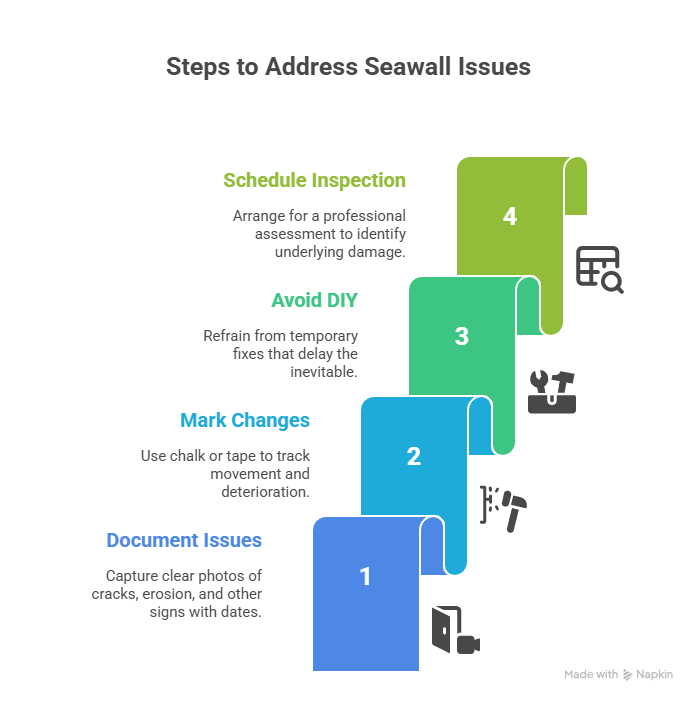
Spotting a problem is the first step, now comes the action. If you’ve noticed cracks, erosion, leaning, or seepage, don’t wait for confirmation that something’s wrong. You’re not being paranoid. These are well-documented, high-risk signs of seawall failure.
Here’s what you should do:
- Document everything – Take clear photos of every visible issue: cracks, sinkholes, rust, leaks, and ground movement. Include dates. This helps you track progression and makes future consultations easier.
- Mark changes – Use chalk or tape to mark the ends of a crack or measure how far a section has tilted. Even a few millimeters of movement in a week signals rapid deterioration.
- Avoid DIY patching – Caulking a crack or refilling a sinkhole with dirt won’t fix the problem. It just delays the inevitable.
- Schedule a professional inspection – The sooner, the better. A specialist can assess the internal structure of your wall and recommend appropriate next steps.
Remember, visible surface issues are often just the tip of the iceberg. The real damage is usually underground.
Modern Seawall Repair Options: No Demolition Required
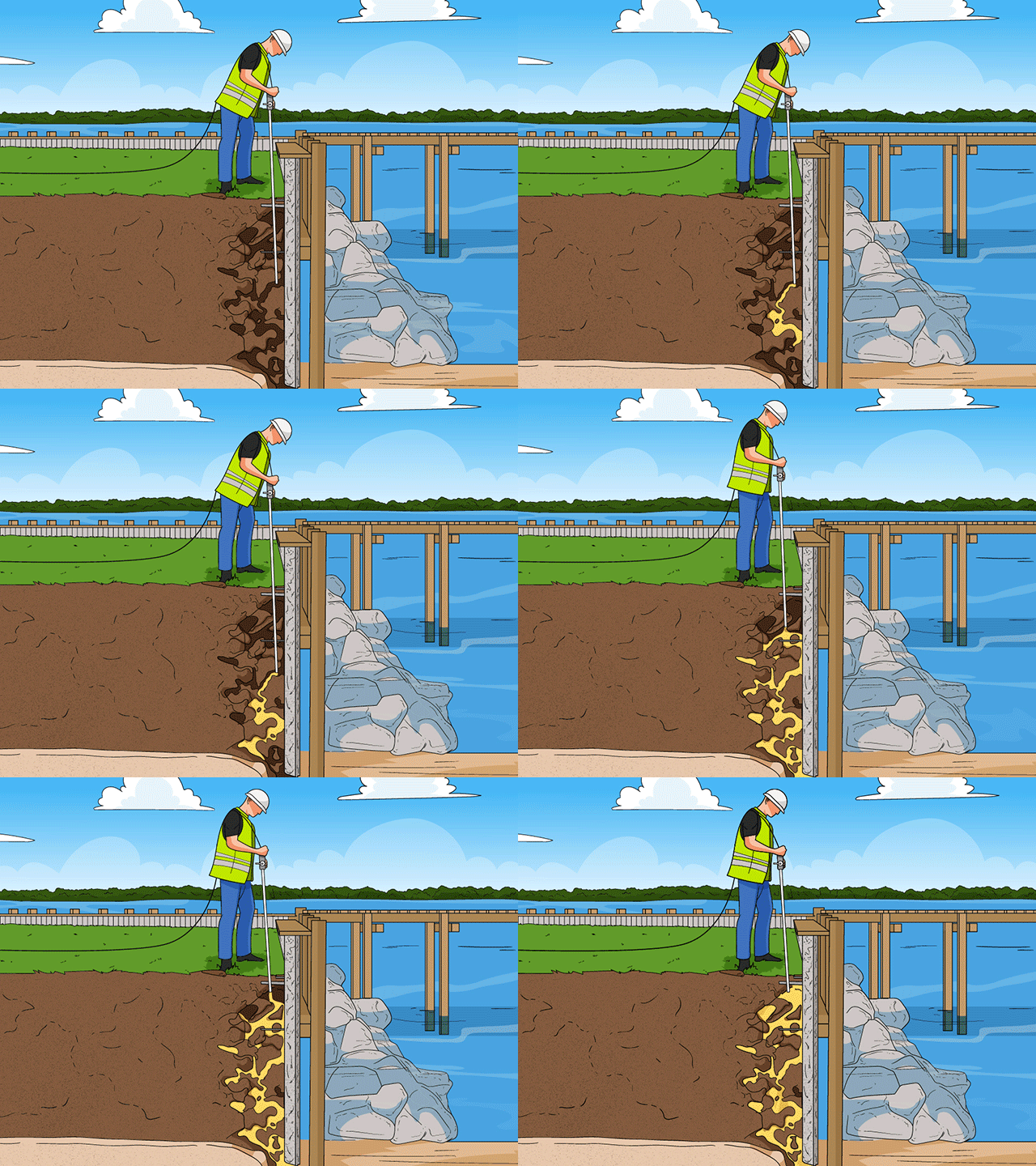
If the phrase “seawall repair” makes you think of excavators and torn-up landscaping, you’re stuck in the past. Modern repair techniques, like polyurethane foam injection, can stabilize and restore failing seawalls without digging them up.
Here’s how it works:
- Small injection ports are drilled into the seawall or the soil behind it
- A two-part polyurethane foam is injected into voids or weak soil
- The foam expands, filling empty pockets, compacting the ground, and sealing water pathways
- In minutes, it hardens into a dense, waterproof material that stabilizes the entire area
It’s quick, clean, and proven to last decades. Most projects are completed in a single day with no disruption to your property.
If you want to understand how this process restores structural strength, Seawall Repair Network offers technical overviews and case studies.
When Full Seawall Replacement is Unavoidable
Sometimes, a seawall is just too far gone. If your wall has:
- Collapsed sections
- Massive voids behind the structure
- Widespread rusted tiebacks
- Multiple leaning or shifted panels
- Advanced cracking with exposed rebar
…it’s likely time for replacement.
Replacement is costly, but it’s also an opportunity to upgrade to newer materials like vinyl or composite, improve drainage systems, and rebuild your property’s shoreline for long-term stability. That said, acting early often avoids this scenario entirely.
Preventing Future Seawall Failure
Once your seawall is stabilized or replaced, the work isn’t over. Prevention is the final piece of the puzzle. Here’s how to make sure history doesn’t repeat itself:
1. Routine Inspections
Have a professional check your seawall at least once a year, more often if you’re near active waterways, heavy boat traffic, or areas with known erosion issues. Don’t wait until something breaks.
2. Clear Drainage Systems
Ensure weep holes are open and functioning. Consider installing filter fabric or newer drain tech to prevent clogging. Good drainage relieves pressure and prevents leaks.
3. Maintain Capstones and Seams
Have your capstones sealed and joints inspected regularly. These protect against water intrusion from the top, which is often overlooked.
4. Watch Landscaping and Runoff
Avoid planting deep-rooted trees near the wall. Also, redirect rainwater away from the seawall using gutters or swales. Surface water buildup behind the wall accelerates deterioration.
How Professional Inspections Help Catch the Unseen
You don’t have to be a marine construction expert to protect your property. The real value lies in having a trusted inspection team that knows what to look for, the stuff most homeowners miss.
Inspectors can:
- Use thermal imaging and radar to detect voids and erosion
- Identify internal cracking not visible on the surface
- Assess tieback strength and hidden corrosion
- Recommend whether you need repair or replacement
- Provide peace of mind when selling or refinancing
If you’re in Florida, Adams Seawall Repair provides in-depth inspections and customized repair solutions tailored to your specific seawall type, soil conditions, and water exposure levels.
Why You Should Act Now, Not Later
Here’s the thing, seawall problems don’t pause. Once failure begins, it almost never stops on its own. In fact, heavy rain, rising tides, or a single boat wake could speed up the damage overnight.
Waiting too long turns a manageable repair into a financial nightmare. We’ve seen cases where a crack ignored for 6 months became a collapsed wall requiring a $60,000 replacement.
On the flip side, homeowners who acted early with foam injection or minor reinforcement work often spent under $10,000 and never had another issue again.
The gap between those outcomes? Timing.
Summary: Top Signs Your Seawall Needs Immediate Attention
Here’s a quick recap of red flags you should never ignore:
- Cracks widening or multiplying
- Soil erosion, depressions, or sinkholes behind the wall
- Leaning, bowing, or tilting of any section
- Water seeping through seams or face of the wall
- Rust on hardware or exposed steel
- Loose or missing capstones
- Shifting patios or uneven pavers nearby
- Excess plant growth from joints or weep holes
- Poor drainage after storms or high tide
- Age over 20 years with no recent inspection
If you spot even two or three of these, your seawall is likely failing internally, and the best time to act is right now.
FAQs
What are the most common signs of seawall failure?
Common signs include cracks, soil loss, water seepage, leaning or bowing panels, rusted tiebacks, and sinkholes forming behind the wall.
How urgent is seawall repair once cracks appear?
Cracks—especially those widening or forming near joints—should be addressed immediately. They often signal deeper structural issues that worsen rapidly.
Can a failing seawall be repaired without replacing it?
Yes. In many cases, polyurethane foam injection can stabilize the structure by sealing voids, stopping leaks, and compacting weakened soil.
Is it cheaper to repair a seawall early?
Absolutely. Early intervention can reduce costs dramatically. Delaying often leads to full wall replacement, which is far more expensive.
How often should a seawall be inspected?
Seawalls over 20 years old should be inspected at least once per year, especially in areas with heavy rainfall, boat traffic, or tidal exposure.
Final Word: Protect What’s Holding It All Together
Your seawall might not be the flashiest part of your property, but it’s one of the most important. Without it, there’s no backyard. No patio. No value.
Letting a failing seawall go unchecked is like watching a slow-moving landslide and hoping it stops on its own.
If you’re unsure about the condition of your wall, don’t guess. Get it inspected. Whether you need a minor repair or full reinforcement, modern solutions like polyurethane foam injection can extend your wall’s life and safeguard your property for decades. Ready to Book an Inspection?
Visit Adams Seawall Repair to schedule a no-obligation inspection or get expert advice on your repair options.