A small void behind a seawall can become a much larger waterfront problem after one hard rain, king tide, or storm surge. The pavers may start to settle, a crack may spread along the cap, or soil may wash out through seams in the wall. Seawall repair without excavation addresses these failures at their source without tearing up the yard, removing landscaping, or putting everyday use of the property on hold.
For Florida waterfront homeowners, that matters. A seawall is not simply a boundary at the edge of the water. It supports the land behind it, protects patios and pools, helps preserve docks and walkways, and safeguards a major part of the property’s value. When erosion begins behind the wall, waiting can turn a focused repair into a far more expensive structural project.
Why Soil Loss Happens Behind a Seawall
Most seawall problems begin out of sight. Water moves through joints, cracks, utility penetrations, or gaps around tiebacks and drains. As it moves, it carries fine soil particles with it. This process, often called soil migration, leaves empty spaces behind the seawall even when the wall still looks reasonably straight from the water.
Florida’s wet season, tidal changes, boat wake, and intense rain can speed up that process. Water entering from the land side can be just as damaging as water pressure from the canal, bay, or river. If drainage is poor, saturated soil adds pressure to the wall while escaping soil reduces the support it needs.
Visible warning signs deserve prompt attention. Look for sinking pavers, cracks in a pool deck or driveway, low spots near the seawall, separated cap sections, washed-out soil, or a gap between the ground and the wall. A leaning wall, bowing panels, or loose tieback rods may indicate a more advanced structural issue.
What Seawall Repair Without Excavation Can Do
A repair-first approach does not mean applying a quick surface patch. The goal is to stabilize the soil behind the wall, fill voids, reduce the pathways allowing water and soil to move, and restore support where it has been lost.
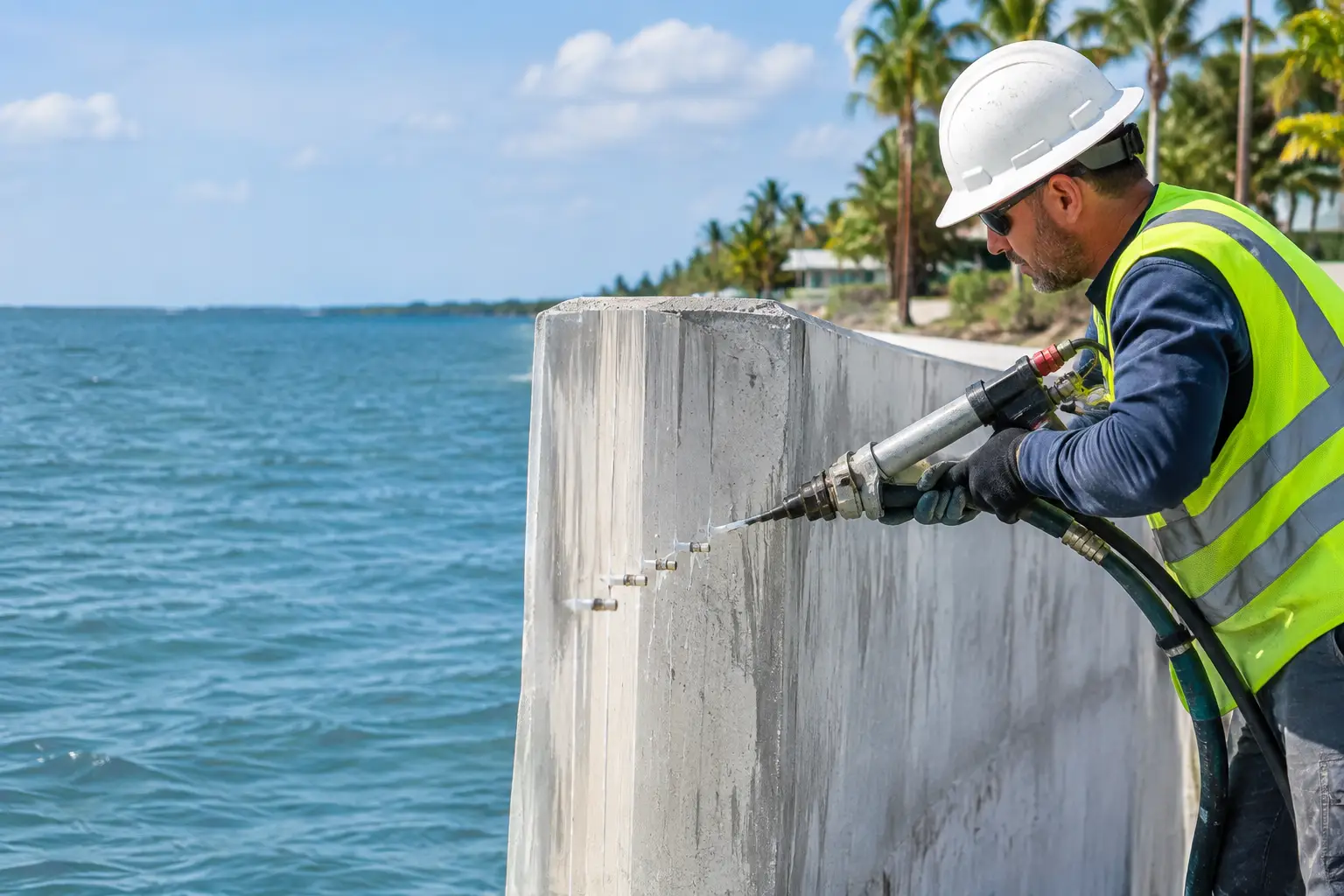
One common minimally invasive method uses carefully placed injection points to deliver an eco-safe stabilization material into the affected area. The material can fill hidden voids and bind loose soils while requiring only small access points from the land side. Once the soil mass is stabilized, the ground behind the wall is better able to support hardscape, landscaping, and nearby structures.
Depending on the condition of the wall, repair may also include sealing joints or cracks, addressing failed drainage components, restoring sections of cap, or reinforcing specific structural areas. The right scope depends on what an inspection finds. Soil stabilization can solve an erosion problem, but it cannot correct every type of seawall failure on its own.
This is why diagnosis comes before recommendations. A property with a few localized voids needs a different plan than one with deteriorated panels, severe movement, broken tiebacks, or a wall that has lost its structural alignment.
The Process Is Designed to Protect the Property
Traditional excavation may require removing pavers, cutting concrete, relocating plants, disturbing irrigation, and reopening areas that homeowners use every day. It can be necessary in certain cases, but it should not be the default answer when a less disruptive repair will provide a durable result.
With non-excavation repair, a trained marine repair team identifies likely soil-loss areas, plans access points, and performs the stabilization work with limited disturbance. The objective is to repair the issue beneath the surface while preserving the property above it as much as practical.
That is especially valuable for homes with finished outdoor spaces. On Gulf Coast properties, the land behind a seawall may include a pool deck, outdoor kitchen, mature landscaping, boat lift controls, or a narrow side yard with little room for heavy equipment. Avoiding excavation can reduce restoration work and keep the project more manageable.
When a No-Excavation Repair Is a Good Fit
Minimally invasive seawall repair is often a strong option when the primary problem is soil loss behind an otherwise serviceable wall. It may be appropriate when settlement is localized, the wall remains generally plumb, and inspection shows that stabilization and sealing can restore support.
It can also make sense for property owners who want to act before visible damage becomes severe. A small depression near the seawall is not just a cosmetic issue. It may be evidence of a void developing below the surface. Addressing it early can help protect the cap, adjacent concrete, and the land that supports them.
Repair is not automatically the best solution in every situation. Full replacement or significant reconstruction may be necessary if panels are badly cracked, the wall is substantially leaning, tieback systems have failed beyond repair, or the structure has reached the end of its useful life. Honest recommendations matter here. Paying for a limited repair when the wall needs reconstruction does not protect the property or the owner’s budget.
A no-conflict inspection helps separate these scenarios. The assessment should focus on the wall’s condition, signs of erosion, drainage, the condition of surrounding surfaces, and whether the repair target is soil stabilization, structural correction, or both.
The Cost Question: Repair First, Not Replacement First
Waterfront property owners often delay calling because they expect a seawall problem to mean a full replacement project. That concern is understandable. Replacement can involve permits, demolition, heavy equipment, extended timelines, and restoration of the property after construction.
When repair is appropriate, avoiding excavation can save money in more than one way. There may be less demolition, fewer landscape repairs, and less need to replace disturbed pavers, concrete, irrigation, or fencing. The work can also be completed with less disruption to tenants, family, neighbors, and access to the dock.
Still, cost should not be the only deciding factor. The lowest initial price is not a value if it leaves active erosion untreated. A clear repair plan should explain what is causing the damage, what work will be performed, what areas will be accessed, and what outcome the repair is designed to achieve.
At Adams Seawall and Foundation Repair, the repair-first approach begins with a free inspection and a practical plan based on the actual condition of the seawall. For qualifying repairs, homeowners also receive the added confidence of a 30-year transferable warranty. That long-term protection can matter when preserving the property today and when planning for a future sale.
Protecting the Repair After the Work Is Done
A repaired seawall benefits from regular attention. Check the landward side after periods of heavy rain and after major storms. Watch for new settlement, standing water, open joints, or washed-out material around drains and utilities. Keeping drainage paths clear helps prevent water from building up behind the wall.
Dock and shoreline components deserve attention, too. Damaged pilings, loose dock connections, and neglected waterfront hardware can add stress to the area and make routine maintenance harder. A well-maintained waterfront is easier to inspect and easier to protect before small issues spread.
If you notice sinking ground, cracks near the water, or soil disappearing behind your seawall, do not assume the wall must be excavated or replaced. A timely inspection can show whether a targeted, low-disruption repair can stabilize the shoreline and help you keep enjoying the property you worked hard to own.