
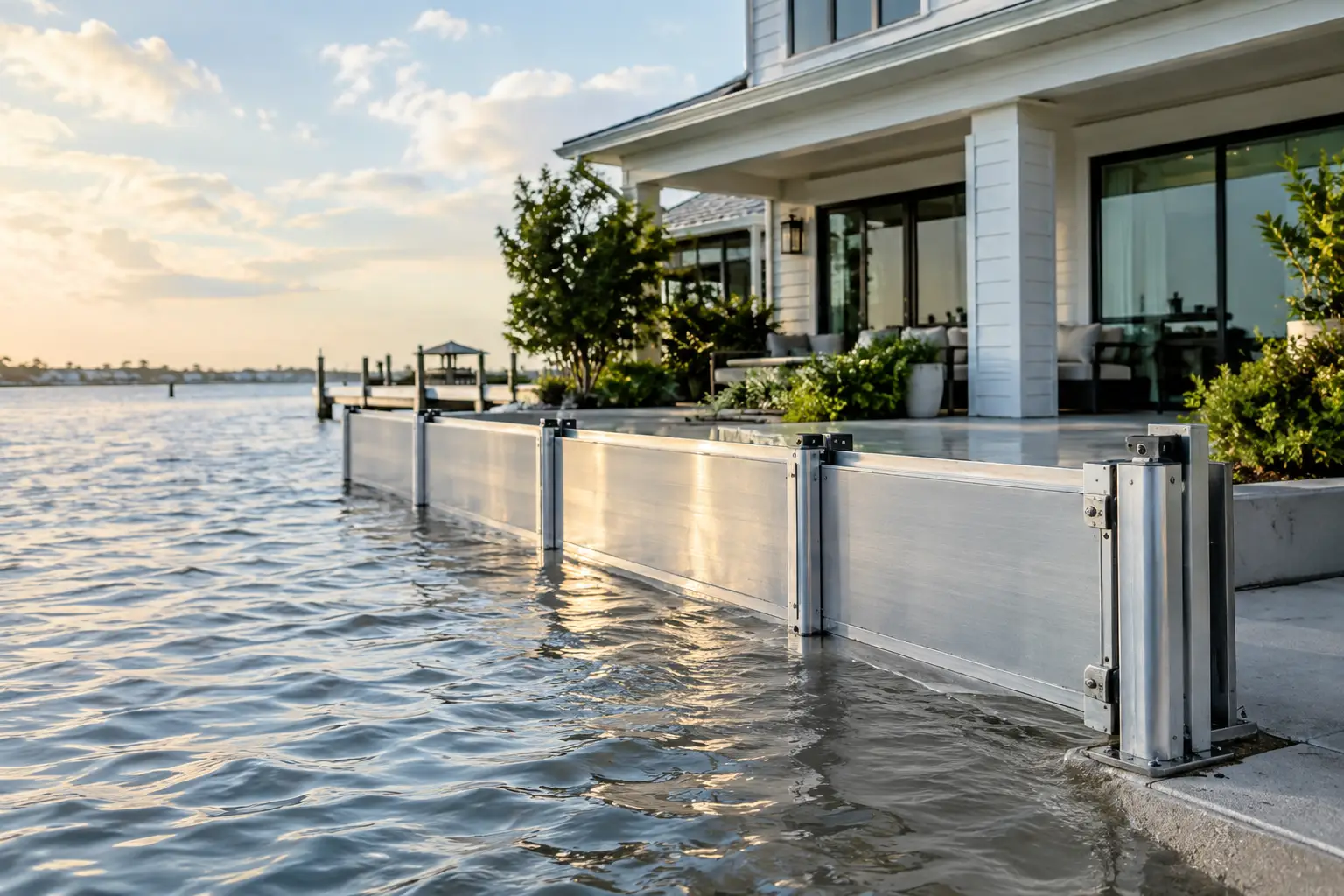
A waterfront home can take on water from more than one direction. Storm surge may push water across the shoreline, while heavy rain can overwhelm drainage and rising groundwater can move through weakened soil behind a seawall. That is why flood barriers for waterfront homes need to be part of a larger protection plan, not a stand-alone purchase made when a storm is already approaching.
For Florida homeowners, the right barrier depends on the property’s elevation, shoreline exposure, seawall condition, openings around the home, and the type of flooding most likely to occur. A removable barrier at a low door may make sense for one canal-front property. Another home may need soil stabilization and seawall repair before any barrier can offer meaningful protection.
What Flood Barriers for Waterfront Homes Can Do
Flood barriers are designed to slow, redirect, or block water from entering vulnerable areas. They can protect exterior doors, garage openings, low patios, pool equipment, utility areas, and access points where water tends to travel first. Used correctly, they can reduce cleanup, limit interior damage, and buy valuable time during a fast-moving storm event.
The key word is reduce. No practical residential barrier can guarantee that a property will remain dry during every hurricane, king tide, or major rain event. Water finds low spots, gaps, drains, and weak soil. A barrier is most effective when it addresses a specific, known path of water rather than trying to create a fortress around an entire waterfront lot.
For example, if water repeatedly enters through a garage door during tidal flooding, a fitted flood panel or gate can be a practical solution. If water is washing soil out from behind the seawall and settling the pavers near the house, the priority is different. The property needs the underlying shoreline structure evaluated and repaired before surface-level flood protection can do its job.
Start With the Source of the Water
Homeowners often focus on the place where water shows up, such as a wet patio or a flooded garage. That is understandable, but the more useful question is where the water started and how it reached that point.
Waterfront flooding usually falls into three overlapping categories: surge and tidal water from the shoreline, stormwater from intense rain, and groundwater moving through saturated or eroded soil. Each requires a different response.
Surge and tidal flooding may call for removable flood panels, door barriers, or a carefully designed perimeter system around a limited area. Rain-driven flooding may point to drainage improvements, grading corrections, or protection for low openings. Water moving through soil behind a seawall can signal voids, failed joints, cracks, or loss of backfill. In that situation, adding a barrier at the door may protect the interior temporarily, but it does not stop the structural problem from getting worse.
A professional inspection should look beyond the visible water line. Cracking concrete, sinking pavers, leaning walls, washed-out soil, gaps near cap joints, and recurring puddles near the seawall are all signs that deserve attention. The earlier those conditions are addressed, the more options a homeowner typically has.
Common Barrier Options and Their Trade-Offs
There is no single best product for every Florida waterfront property. The right choice comes down to the height of expected water, the width of the opening, how quickly the system must be installed, and whether the area needs daily access.
Removable Door and Garage Barriers
These systems use panels or gates that attach to permanent side tracks or anchors. They are often a good fit for entry doors, sliding glass doors, garage doors, and other defined openings.
Their biggest advantage is targeted protection. When installed correctly, they can provide a reliable seal across a specific low point without changing the appearance of the property year-round. The trade-off is preparation. Panels must be stored where they can be reached, installed before conditions become unsafe, and checked for damaged seals, missing hardware, or debris in the tracks.
Temporary Water-Filled Barriers
Water-filled tubes and similar temporary systems can help redirect shallow water away from patios, driveways, and landscaping. They are generally faster to position than sandbags and can cover longer runs.
They are not a substitute for engineered shoreline protection, and they are less useful where water is deep, fast-moving, or likely to flow around the ends. They also require adequate space, a water source, and a plan for draining and storing them afterward.
Flood Vents and Wet Floodproofing
For enclosed ground-level spaces built to allow water entry, flood vents can help equalize pressure and reduce the chance that hydrostatic pressure damages walls. Wet floodproofing accepts that water may enter a non-living area, then uses water-resistant materials and proper drainage to reduce the damage.
This approach is not appropriate for every room or every home. It requires careful consideration of local building requirements, utilities, insulation, finishes, and the intended use of the space. It is often more relevant to storage enclosures or lower-level areas than to finished living space.
Landscape and Site Barriers
Berms, retaining features, raised hardscape, and revised grading can guide shallow surface water away from a home. These solutions can be useful when the primary issue is rainfall runoff or a low section of the yard.
On waterfront lots, site work must be planned carefully. Raising one area can push water toward a neighbor, trap water against the house, or interfere with drainage. It should also never place extra pressure on an already compromised seawall.
Your Seawall Is Part of the Flood Protection System
A seawall is not just a property line at the water’s edge. It is the structure holding back soil, supporting the land behind it, and helping protect patios, pools, walkways, and foundations from erosion. When it develops cracks, open joints, voids, or movement, water can travel behind it with every tide and storm.
That hidden soil loss matters because flood barriers work at the surface. They cannot restore missing backfill, stabilize settling ground, or correct a wall that is beginning to fail. In fact, a homeowner may see water at a low doorway long before realizing that erosion behind the seawall is contributing to the problem.
A repair-first approach can often stabilize a seawall without major excavation or unnecessary replacement. Methods that seal leaks, fill voids, and strengthen the soil behind the wall can address the pathway water is using. This protects the barrier investment as well as the land and structures it is meant to defend.
Build a Plan Before Storm Season
The best time to choose and test a flood barrier is when the forecast is calm. Waiting until a named storm is approaching leaves little time to measure openings, order the right system, locate hardware, or determine whether the seawall and drainage are in sound condition.
Start by identifying the lowest openings and reviewing where water has entered during past storms or unusually high tides. Photograph those areas, note the depth and direction of water flow, and look for changes in the ground near the seawall. If the same spot stays wet after rain or tides, it is worth finding out whether the cause is drainage, elevation, or soil loss.
Then make sure the barrier plan is realistic for the people who will need to use it. A large panel system is only useful if someone can safely install it. Store components together, label each opening, keep replacement seals available, and practice setup at least once before hurricane season. For second-home owners, consider who will be responsible for installation if you are away.
Do not overlook utilities. Elevating or protecting electrical components, HVAC equipment, pool controls, and dock equipment may prevent expensive damage even if a small amount of water reaches the yard or garage.
When a Barrier Is Not Enough
Call for a waterfront inspection when flooding is paired with seawall cracks, recurring soil loss, sinking pavers, a tilted cap, gaps near the shoreline, or water appearing where it never did before. Those conditions can point to a structural issue that will not be solved by placing a barrier in front of the home.
Adams Seawall and Foundation Repair helps Florida waterfront owners identify the cause of erosion and settlement with a no-conflict inspection, then develop a practical repair plan that minimizes disruption. Addressing the shoreline structure early can help avoid more extensive damage to the yard, dock, hardscape, and foundation later.
A well-chosen barrier can protect a vulnerable opening. A sound seawall, stable soil, and workable drainage plan protect the ground beneath the rest of your property. Treat them as one system, and you will be in a stronger position when the water rises.