A piling can look solid above the waterline while marine borers are quietly weakening the wood below it. That is why dock piling wrap installation matters for Florida waterfront owners. A properly fitted wrap creates a physical barrier around vulnerable timber, helping protect the dock structure from the organisms and conditions that can turn an expensive asset into a safety concern.
For canal-front, bayfront, riverfront, and coastal properties, piling protection is not a cosmetic upgrade. It is preventive maintenance that can help extend the useful life of the dock, reduce the chance of unexpected repairs, and support the long-term value of the waterfront property.
Why Florida Dock Pilings Need Protection
Florida waters are hard on wood. Saltwater, changing tides, sun exposure, algae growth, and constant wet-dry cycles all take a toll. The greatest hidden threat is often marine wood-boring organisms, including shipworms and gribbles. Despite the name, shipworms are not worms. They are marine mollusks that tunnel into submerged wood, leaving the outside of a piling deceptively intact until significant interior damage has occurred.
This damage usually begins below the surface, where a homeowner cannot see it during a walk down the dock. Over time, the piling may become soft, hollowed, split, or structurally unreliable. A weakened piling can affect dock framing, boat lifts, walkways, and handrails. In severe cases, it can create a risk for anyone using the dock.
Protecting the piling before extensive damage develops is usually far more manageable than replacing multiple structural posts after the fact. Like seawall maintenance, early action gives property owners more options and helps avoid unnecessary disruption.
What Dock Piling Wraps Do
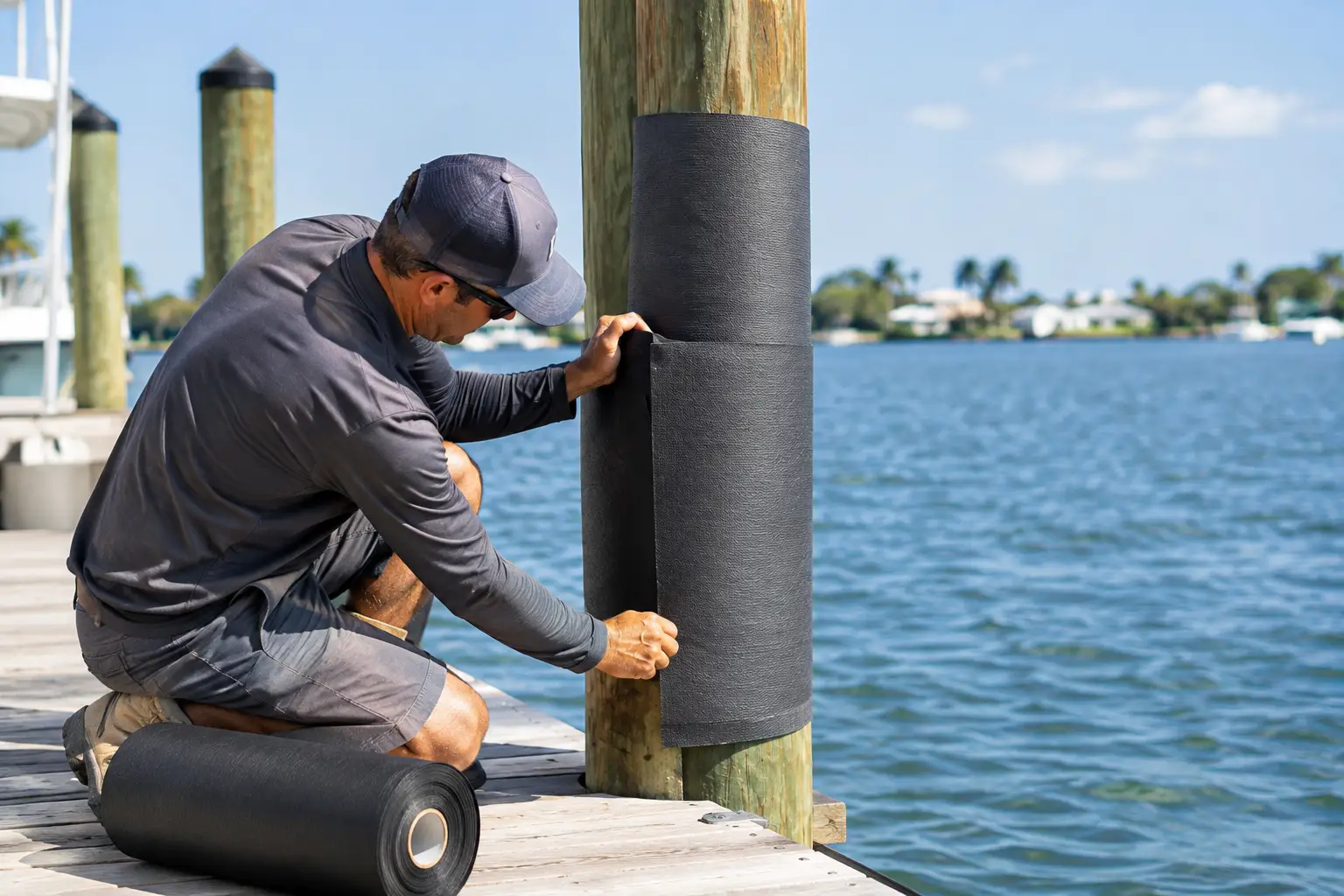
Piling wraps are durable protective barriers installed around the submerged and splash-zone portions of a timber piling. Their main purpose is to limit marine organisms’ access to the wood. A quality wrap also helps shield the piling from direct exposure to the harsh underwater environment.
The wrap itself is only part of the solution. Its effectiveness depends on proper sizing, careful preparation, secure fastening, and a close fit around the piling. Gaps, loose seams, damaged fasteners, or an incorrect installation height can allow waterborne organisms to reach the wood behind the barrier.
A wrap does not restore wood that is already extensively compromised. If a piling has major internal loss, severe cracking, or movement, it needs a professional condition assessment before any protective work begins. In some cases, wrapping a failing piling can hide a problem rather than solve it. The right approach depends on the condition of the wood, the piling’s role in the dock structure, and the water conditions at the property.
Dock Piling Wrap Installation Starts With Inspection
A responsible dock piling wrap installation should begin with a close inspection, not a one-size-fits-all recommendation. The visible portion of the dock can provide useful clues, but submerged areas deserve equal attention.
A contractor should look for splitting near the waterline, soft or damaged wood, holes, missing material, loose dock connections, leaning posts, and evidence that the piling has shifted. The waterline is especially important because it is exposed to both sun and moisture, creating a high-stress transition zone.
The inspection also helps determine whether piling wraps are the appropriate solution for every post. Some pilings may be in good enough condition for preventive wrapping. Others may require repair, reinforcement, or replacement first. A clear recommendation should explain what is being protected, what damage already exists, and whether additional dock or seawall concerns deserve attention.
For Florida homeowners, this inspection-led approach prevents money from being spent on surface-level work when a deeper structural issue is present.
How the Installation Process Works
The exact method varies with the piling material, water depth, tidal conditions, dock layout, and access. Still, professional installation follows a deliberate sequence designed to protect the wood without interfering with the dock’s operation.
Preparing the Piling
Before the wrap is applied, the piling must be evaluated and prepared. Marine growth, loose debris, and anything that prevents a close fit are addressed. The installer measures the piling and identifies the proper coverage area, including the vulnerable submerged section and the splash zone near the waterline.
Preparation matters because wraps are not meant to float loosely around the post. They need to sit correctly against the piling and be installed with secure seams. Rushing this step can reduce the lifespan and protection the system is meant to provide.
Fitting and Securing the Wrap
The wrap is placed around the timber, aligned to cover the intended protection zone, and fastened according to the product and site requirements. Proper overlap and seam placement are essential. The goal is a continuous barrier that reduces exposed pathways to the wood.
Installers also account for normal water movement and changing conditions. A dock on a protected canal may have different exposure than one facing open water or heavy boat traffic. Current, wake, tidal range, and access all influence how the work is planned.
Checking Dock Connections and Final Fit
Once installed, the wrap should be checked for secure attachment, appropriate height, clean seams, and interference with braces, decking, lifts, or other dock components. This is also a good time to inspect nearby pilings. If one post has signs of borer activity, others installed at the same time in the same water may face similar risk.
Professional work should leave the dock functional and the property orderly. For most owners, the benefit of piling wraps is not just protection. It is gaining a practical maintenance solution without turning the yard or waterfront into a long-term construction zone.
Choosing the Right Time for Piling Wraps
The best time to install wraps is before visible damage becomes serious. Newer timber pilings are often strong candidates for preventive protection, particularly in saltwater or brackish environments where marine borers are active.
That said, older docks should not be written off. Many established Florida properties have pilings that remain structurally sound but need added protection to help slow future deterioration. An inspection can help distinguish between posts worth preserving and posts that need more extensive attention.
Season and access can affect scheduling. Weather, tide cycles, water clarity, boat placement, and marine activity may influence the installation plan. Homeowners can make the project easier by clearing dock access, moving boats when requested, and sharing any known history of repairs, storm damage, or prior piling treatments.
Piling Wraps Are Part of a Larger Waterfront Maintenance Plan
A dock does not operate separately from the shoreline around it. Soil loss behind a seawall, a settling deck, storm-driven water movement, or damaged drainage can all affect how waterfront structures perform over time.
While piling wraps protect the timber itself, they do not correct a failing seawall, dock framing damage, or erosion under the property. Those concerns need their own repair plan. Looking at the full waterfront system can help owners prioritize work and avoid fixing one visible issue while another continues to worsen nearby.
At Adams Seawall and Foundation Repair, that practical mindset guides every inspection. The goal is to identify the actual condition of the waterfront asset, recommend repair-first options where they make sense, and avoid pushing replacement when a focused solution can protect the property.
Signs It Is Time to Schedule an Inspection
Do not wait for a piling to fail before asking questions. An inspection is worthwhile when you notice changes such as loose dock sections, pilings that appear to lean, cracks or splits near the waterline, soft wood, unusual movement underfoot, or visible deterioration on neighboring docks in the same waterway.
It is also smart to inspect after major storms, especially if the dock experienced strong wave action, floating debris, or shifting soil around shoreline structures. Storm damage can expose weaknesses that were not obvious before.
For homeowners planning to keep a waterfront property for years, piling protection is a straightforward way to care for an asset that works every day but is easy to overlook. Start with a clear assessment, protect the pilings that can be preserved, and address structural damage before it becomes the repair that interrupts life on the water.