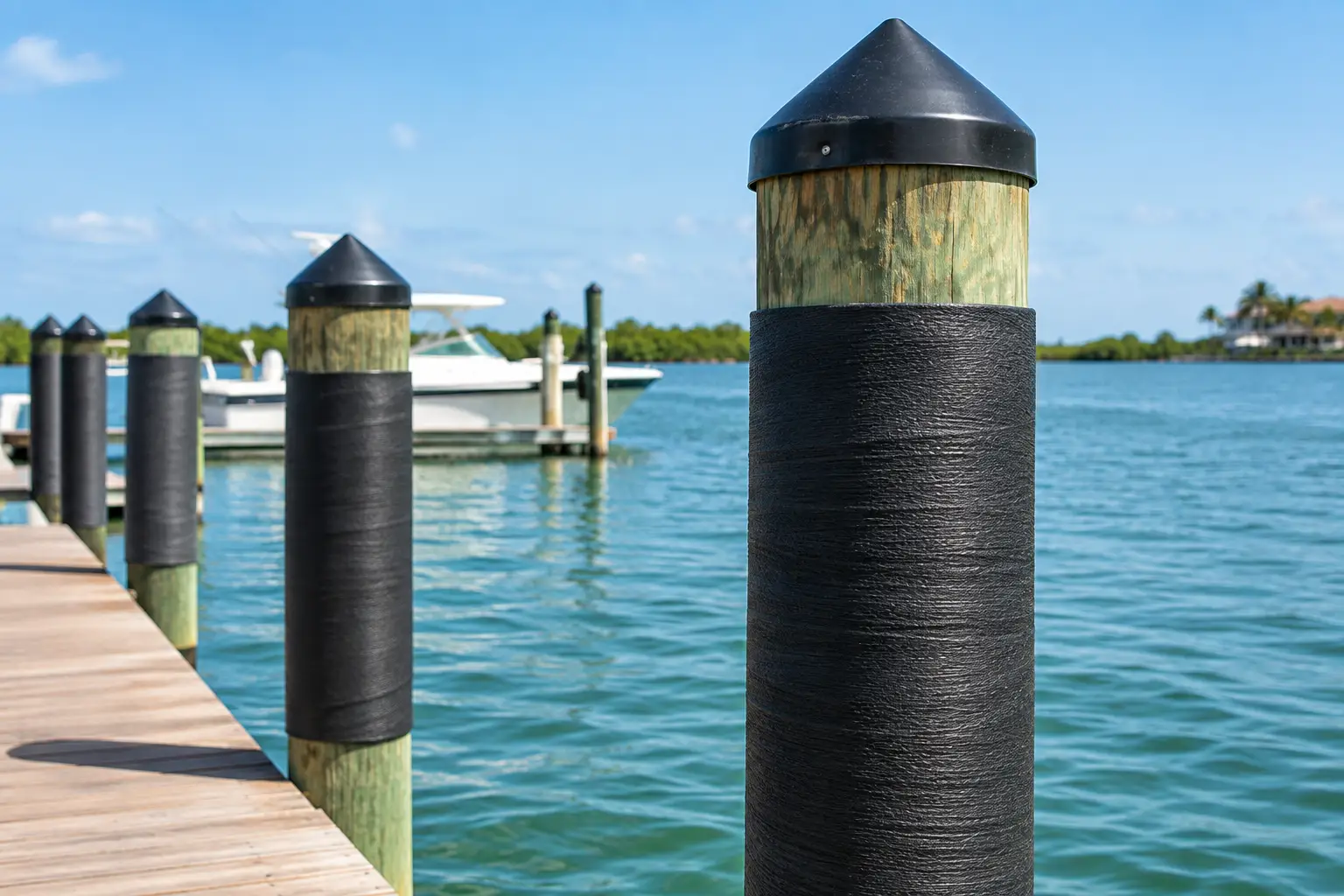
A dock piling can look solid above the water while marine organisms are quietly weakening the portion below it. So, do piling wraps protect dock pilings? Yes – when they are properly sized, installed, and sealed, piling wraps can help protect sound wood pilings from marine borer damage and extend the useful life of a Florida dock.
They are not a cure for every piling problem. A wrap cannot straighten a leaning piling, restore wood that has already been hollowed out, or correct a dock that was damaged by a boat strike, storm surge, or failed connections. The value comes from prevention: placing a durable barrier between vulnerable wood and the organisms that do their worst work underwater.
What Dock Piling Wraps Actually Protect Against
Florida waterfronts create a demanding environment for wood pilings. Saltwater, brackish canals, tidal movement, warm temperatures, and constant wet-dry cycles all affect a dock over time. Of those risks, marine borers are one of the most expensive because the damage can remain out of sight until a piling loses significant strength.
Marine borers include organisms commonly called shipworms and gribbles. Despite the name, shipworms are not worms. They are wood-boring mollusks that can enter exposed timber and create tunnels below the waterline. Gribbles are small crustaceans that feed on the surface of wood. Together, they can cause a piling to become soft, thin, or structurally compromised where an owner cannot easily see the problem.
A properly installed piling wrap forms a physical barrier around the underwater exposure zone. It limits access to the wood and helps prevent boring organisms from reaching it. This is particularly useful on older docks where the original treated pilings remain serviceable but need added protection from continued exposure.
Wraps can also reduce direct abrasion from floating debris, minor contact, and the repeated movement of water around the piling. That added protection does not make a piling indestructible, but it can slow the wear that shortens the life of a dock.
Do Piling Wraps Protect Dock Pilings From Every Problem?
No. Homeowners should be wary of anyone presenting wraps as a one-size-fits-all dock repair. They protect against a specific set of below-water threats, primarily marine borer intrusion. They do not replace a structural assessment.
If a piling is already severely deteriorated, wrapping it may simply cover damage that needs to be addressed. A piling that moves excessively, has deep visible checking, is broken near the mudline, or no longer supports its share of the dock load may require repair, reinforcement, or replacement instead. Covering a failing piling can delay the right decision without improving its capacity.
Piling wraps also do not resolve problems above the waterline. Sun exposure, weathering, rot near deck framing, loose bolts, corroded brackets, and damaged stringers need their own repairs. The same is true for soil movement around shoreline structures. A dock piling and a seawall can both be affected by changing waterfront conditions, but each should be inspected for its own source of damage.
The best approach is simple: protect good wood early, and evaluate questionable wood before investing in protection. That repair-first mindset helps prevent unnecessary replacement while avoiding cosmetic fixes that do not solve the underlying issue.
Where the Wrap Matters Most
The most critical part of a wood piling is usually the zone that remains in or near the water. This area is exposed to marine life and, depending on tidal conditions, may also experience constant wet-dry cycling. The correct wrap height depends on the piling, water conditions, and the installation plan.
In tidal coastal areas, the wrap needs to cover the range where water exposure occurs, not just the water level visible on installation day. On canals, rivers, and protected bays, conditions may differ, but boat wakes, seasonal water changes, and storm events should still be considered. A short wrap or a poorly sealed upper edge can leave vulnerable wood exposed.
Installation quality is just as important as the material. The wrap should fit tightly around the piling, use appropriate fastening methods, and have seams that are properly sealed. Gaps can create an entry point for organisms or allow water movement behind the wrap. An experienced marine contractor will also account for the piling’s shape, existing hardware, depth, and access conditions rather than treating every dock the same.
When Piling Wraps Are a Smart Investment
Piling wraps are often a practical choice when a dock’s pilings are structurally sound but exposed to active marine conditions. They can make particular sense for homeowners who have recently purchased a waterfront property and do not know the full history of the dock, as well as owners who want to preserve original pilings before serious damage appears.
They are also worth considering when selective piling replacement would disrupt a dock that is otherwise in good condition. If an inspection confirms the wood is still sound, protecting it now may help postpone much more involved work later.
The economics depend on the number of pilings, access from land or water, water depth, dock configuration, and whether repairs are needed first. A wrap project is usually less disruptive than replacing multiple pilings, but it should not be selected on price alone. The least expensive installation can become costly if improper fitting allows hidden deterioration to continue.
For second-home owners and investors, wraps can be especially useful as part of a predictable waterfront maintenance plan. Docks are easy to overlook between visits. Adding protection while pilings are healthy can reduce the chance that a small hidden issue becomes an urgent structural repair before the next season.
Signs Your Pilings Need Inspection Before Wrapping
A visual check from the deck is helpful, but it cannot reveal everything happening below the waterline. An inspection is the right first step when a dock feels less stable, deck boards are separating near support points, or a piling appears damaged around the splash zone.
Other warning signs include soft or crumbling wood, unusual movement when a boat is tied off, missing material near the waterline, loose cross-bracing, and pilings that appear out of plumb. Storm damage deserves attention as well. Even when a dock remains standing after a major weather event, impact loads and debris can weaken individual supports.
A qualified marine inspection should distinguish between surface weathering and true loss of structural section. It should also identify whether the dock’s problem comes from the piling itself, the framing attached to it, connection hardware, or movement in the surrounding waterfront environment. That clarity keeps owners from spending money on protection when a repair is the more responsible answer.
Protecting a Dock Takes More Than One Product
Piling wraps work best as one part of regular dock care. Periodic checks of framing, deck boards, cleats, fasteners, electrical components, and vessel tie-off points help catch issues before they spread. After storms, inspect for shifted hardware, impact damage, and changes around the shoreline or seawall.
Keep in mind that no wrap eliminates the need for maintenance. Dock components age at different rates, and Florida’s sun, salt, rain, and storm activity are hard on every waterfront structure. What wraps can do is reduce one of the most destructive hidden threats to wood pilings, allowing a sound dock to remain dependable longer.
For homeowners along Florida’s Gulf Coast, the practical question is not whether every piling needs a wrap immediately. It is whether the pilings you already rely on are still sound enough to protect. A careful inspection and the right preventive work can preserve the dock you enjoy without waiting for hidden damage to force a larger repair.